
Author: Dr. Sudini S. Borkar (PT), Clinical OBG Physiotherapist & Pelvic Floor Therapist at Svãy
Why Are Pelvic Floor Exercises Important for Women: Benefits, Timing & Urinary Incontinence Relief
Introduction
Pelvic floor exercises are a simple way to protect your urinary bladder control, support recovery after childbirth, and feel more confident in your body.
Yet many women never hear about them until a problem appears. It might be a small urine leak when you sneeze, or a heavy feeling low in your pelvis, and so many women live with this quietly.
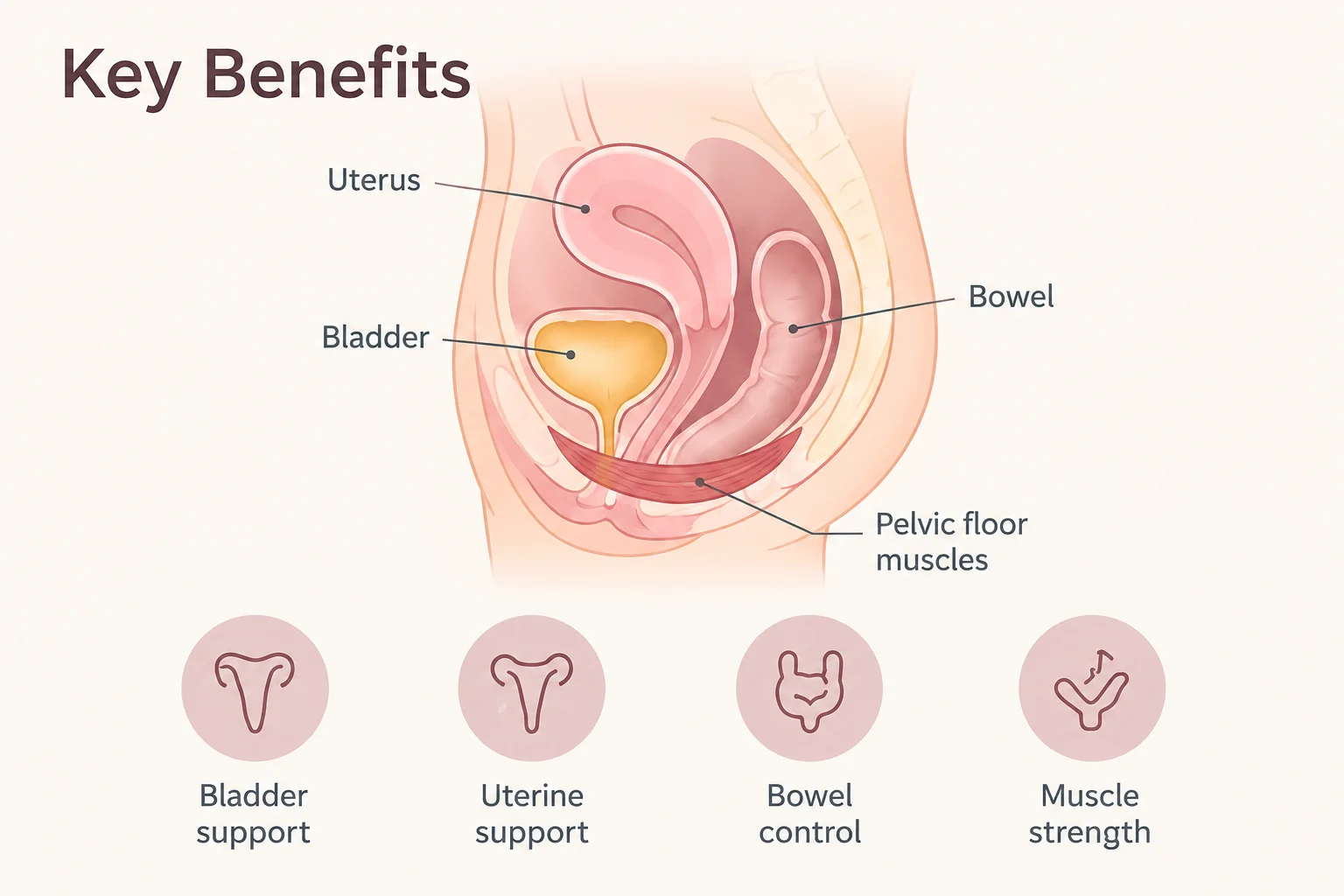
Your pelvic floor is formed by a group of muscles and ligaments running from the pubic bone to the tailbone. It supports your urinary bladder, uterus, and bowel.
This is why pelvic floor exercises are important for women, as their function starts in your twenties and pregnancy and continues till menopause. Around one in three women live with urinary incontinence.
Key Takeaways
- Your pelvic floor helps maintain the function of your urinary bladder, uterus, and bowel at every life stage.
- Pelvic floor training can improve or even stop urine leakage. You can start in your 20s or 30s, or even today.
- Aim for 2 to 3 training sets a day, with 10 repetitions in each. You can expect results in 4 to 12 weeks.
- Relax completely after each squeeze. Never practise while passing urine.
Why Are Pelvic Floor Exercises Important for Women? Key Benefits
- Urinary Bladder and bowel control: helps prevent leakage of urine or feces
- Prolapse prevention: provides support to the uterus, urinary bladder, and bowel
- Intimacy: provides greater sensation, tone, and comfort.
- Pregnancy and postpartum recovery: helps with pushing and healing. A narrative review found that starting in pregnancy lowers the risk of urinary incontinence during and after delivery. Learn why regular pregnancy care matters for you and your baby.
- Core and back stability: works with your abdominal and back muscles to support posture and balance.
Can Pelvic Floor Exercises Help Urinary Incontinence?
Often, yes. The following are the two common types:
- Stress incontinence: leakage occurs when you cough, laugh, sneeze, or exercise.
- Urge incontinence: a sudden, strong need to pass urine.
Kegels strengthen the urethral sphincter so it holds firm under pressure. About two-thirds of women who did pelvic floor training saw their symptoms improve or disappear, compared with about a third who had no treatment.
When Should You Start Pelvic Floor Exercises?
Ideally, it's good to begin your pelvic floor exercises in your 20s or 30s, before symptoms. But if you are past that point, the answer is to start doing them today. Make sure to pay close attention to the following factors:
- Pregnancy and preconception: readiness for delivery. Use our pre-pregnancy health checklist to prepare.
- Postpartum: easing the body back into form, whether after vaginal or C-section birth.
- Perimenopause and menopause: low oestrogen weakens the supporting tissue. See how pelvic health changes after menopause.
- Chronic strain: a long-term cough, constipation, or heavy lifting.
How to Find Your Pelvic Floor Muscles
- Method 1: Imagine stopping airflow or urine. Use this only to identify the muscles, never while actually passing urine.
- Method 2: Picture gently lifting your pelvic muscles upwards while the rest of your body stays relaxed.
Begin by relaxing your tummy, thighs, and buttocks, and then empty your urinary bladder.
Your Step-by-Step Routine
- Gradual squeezes: lift slowly for 3 to 5 seconds and rest for 5 seconds.
- Quick squeezes: One-second squeezes that are done to prepare for sudden coughing.
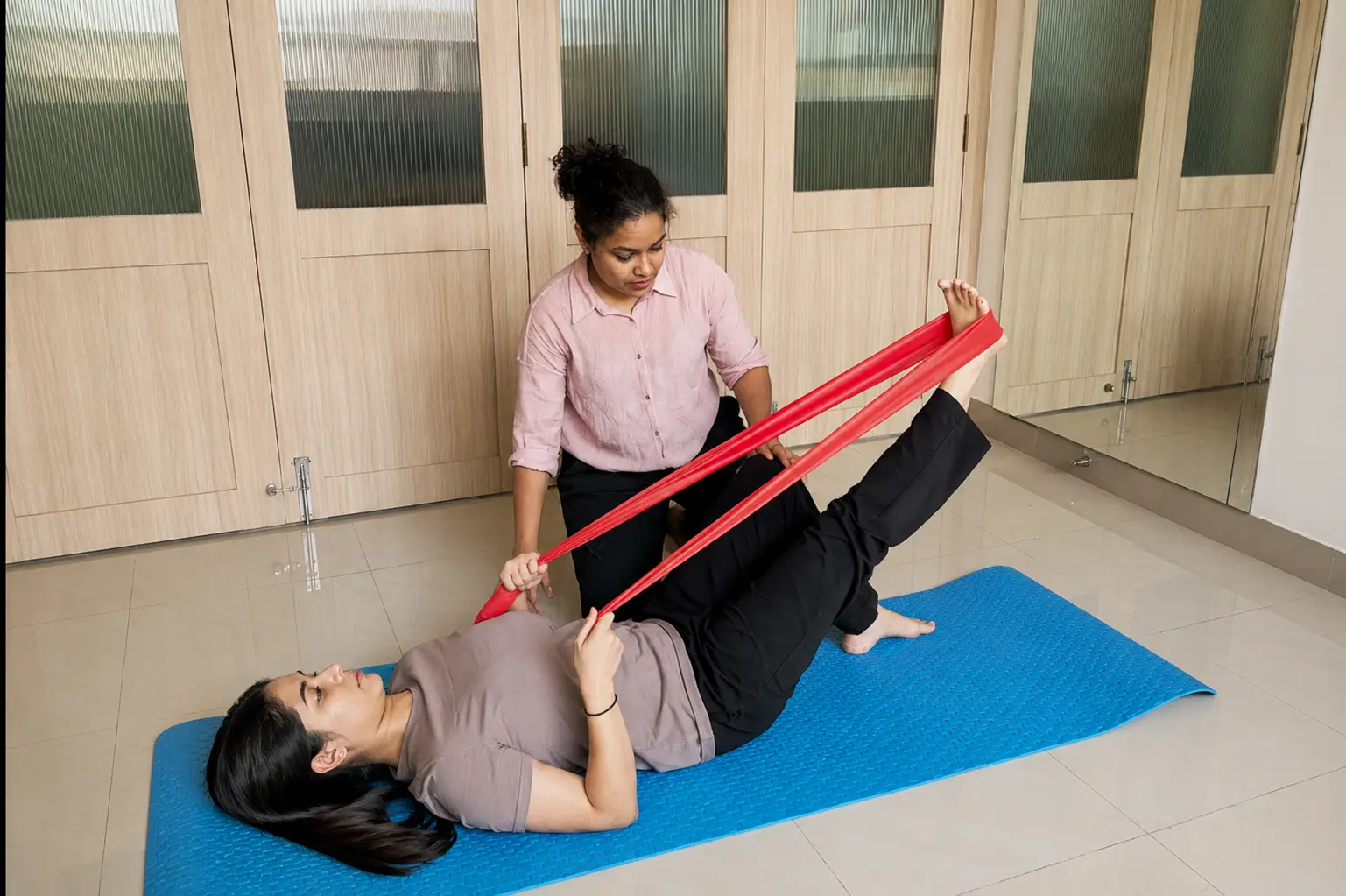
Add glute bridges, squats, and lunges for strength-building, including butterfly and happy baby poses to release tightness, and tabletop leg extensions for your deep core.
How Often Should You Do Pelvic Floor Exercises?
You should do pelvic floor exercises 2 to 3 sets a day, with 10 reps in each set. NICE recommends supervised training for at least three months if you have stress or mixed incontinence.
How Long Does It Take to Strengthen Pelvic Floor Muscles?
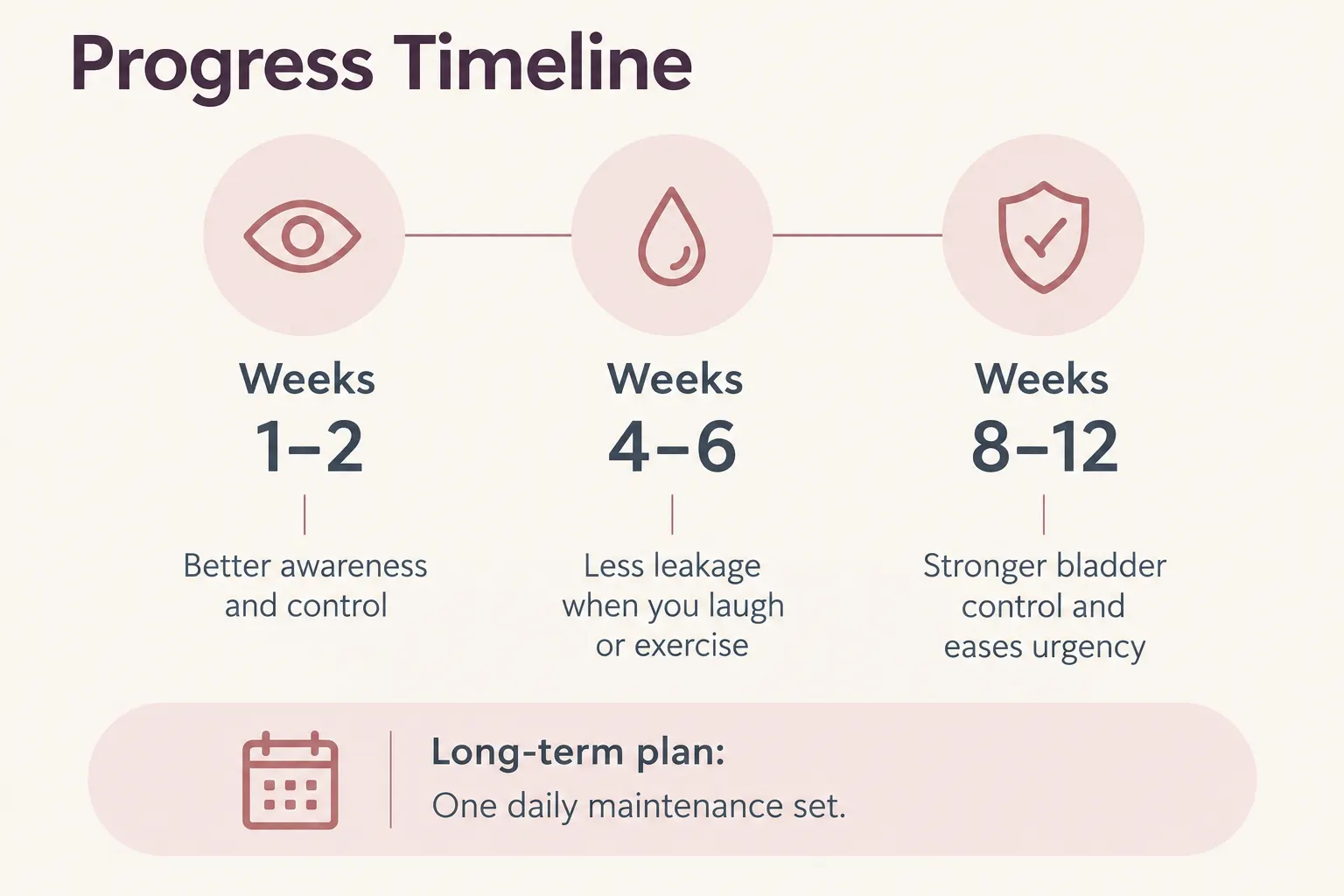
How long does it take to strengthen pelvic floor muscles? Roughly:
- Weeks 1 to 2: Better awareness and control over your pelvic muscles.
- Weeks 4 to 6: Reduction in leakage when you laugh or exercise.
- Weeks 8 to 12: Urinary bladder control feels stronger and urgency eases.
- Long-term plan: One daily maintenance set.
Common Mistakes to Avoid
- Over-squeezing: overly tight muscles can lead to pain, so let them relax fully after each squeeze.
- Holding your breath: ensure that breathing is slow and deep.
- Practising midstream: this can disturb the urinary bladder reflexes.
When to See a Specialist
Seek help if there are leaks continuously for 12 weeks, you feel a bulge, heaviness, or dragging in the vagina, or you have pain during intercourse. A physiotherapist can provide biofeedback, electrical stimulation, or manual therapy.
How Svãy Can Help
Svãy is a holistic women's health clinic that cares for your pelvic health as part of your overall wellbeing.
Svãy's pelvic floor specialist helps with leaks and builds individual health plans. Svãy also offers lactation and prenatal support, counselling, and nutrition, all in a safe, judgement-free space.
Summary
Pelvic floor exercises strengthen the muscles that help to support a woman's urinary bladder, uterus, and bowel. They help prevent urine leakage, prolapse, support pregnancy and postpartum recovery, and improve core stability. Most women perform between 2 and 3 sets daily and see results in 4 to 12 weeks. See a specialist if symptoms continue beyond 12 weeks.
Conclusion
A strong pelvic floor leads to improved urinary bladder control, a stable core, and increased confidence in day-to-day life. All you need is small, steady effort regularly.
Start your five-minute routine today and don’t rush for results. If symptoms persist, get in touch with Svãy for support that puts you first.
FAQs
1: When is the best time to begin pelvic floor exercises in life?
The best time to begin pelvic floor exercises is in your 20s or your 30s. If you are pregnant, postpartum, or going through perimenopause, start now.
2. How Long Does It Take to Strengthen Your Pelvic Floor Muscles?
Most women see changes in about 4 to 6 weeks, with stronger results between 8 to 12 weeks of daily practice.
3. Is it safe to perform pelvic floor exercises while pregnant or after a caesarean?
Yes. They are beneficial both during pregnancy and after both vaginal and caesarean births. Start gently after delivery.
4. How can pelvic floor exercises support pregnancy and delivery?
They support the growing uterus, help reduce leaks, and provide the muscle strength needed for pushing.
5. When should I see a doctor about pelvic floor symptoms?
If leaks continue, or you feel heaviness, a vaginal bulge, or pain during intercourse, see a doctor or pelvic health specialist. Getting help early stops symptoms from getting worse.
References
- North Bristol NHS Trust, Pelvic floor exercises for women: https://nbt.nhs.uk/our-services/a-z-services/physiotherapy/physiotherapy-patient-information/pelvic-floor-exercises-women
- Narrative review of pelvic floor muscle training for childbearing women (University of Otago): https://ourarchive.otago.ac.nz/esploro/outputs/journalArticle/Narrative-review-of-pelvic-floor-muscle/9926495176201891
- NIHR Evidence, Pelvic floor muscle training can improve symptoms of urinary incontinence: https://evidence.nihr.ac.uk/alert/pelvic-floor-muscle-training-can-improve-symptoms-of-urinary-incontinence/
- NICE Quality Standard QS77, Supervised pelvic floor muscle training: https://www.nice.org.uk/guidance/qs77/chapter/Quality-statement-4-Supervised-pelvic-floor-muscle-training


.png)